
My Marriage Feels Like a Roommate Relationship: Can Therapy Help?
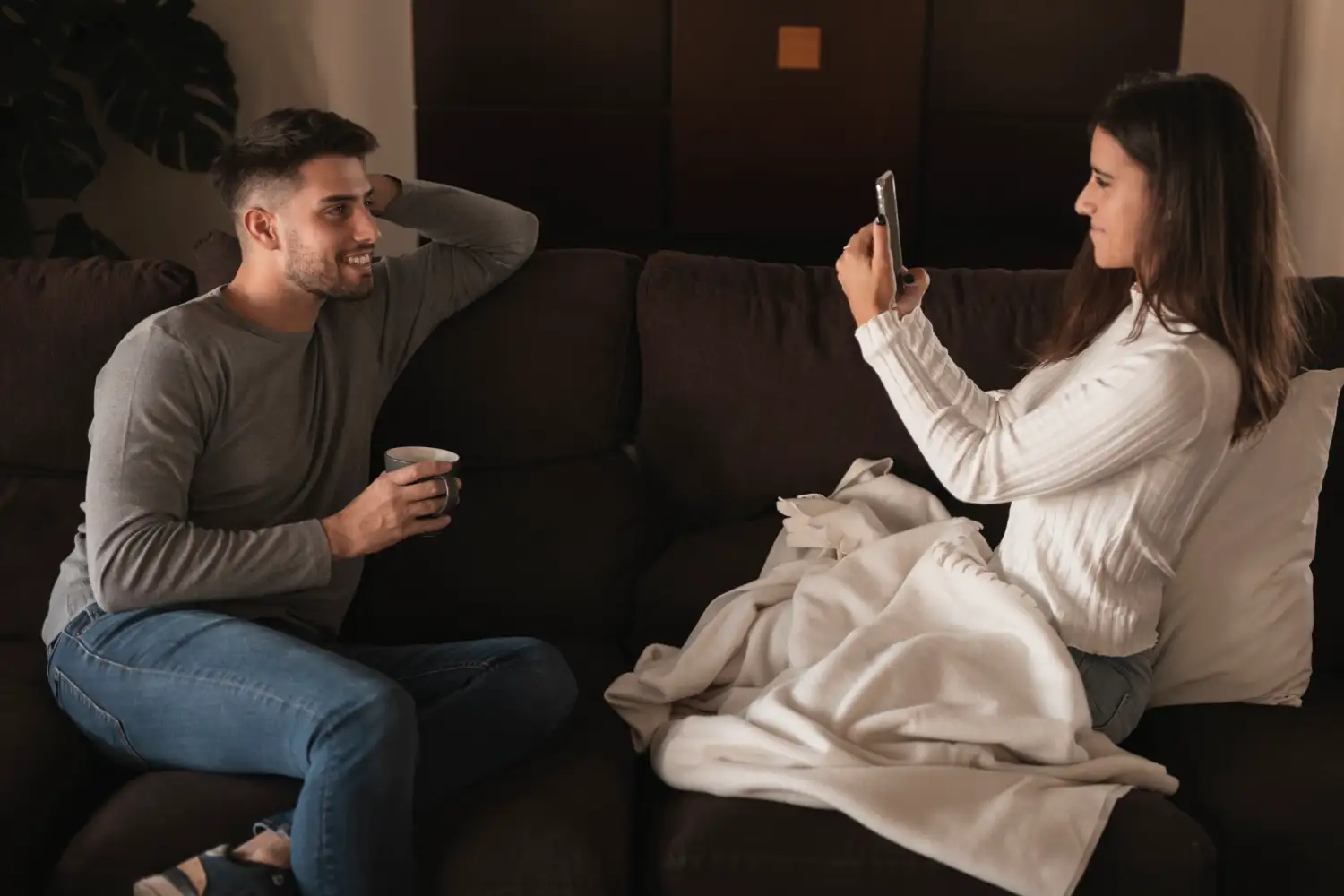
You split the household responsibilities equally. You two try to plan and make dates and have fun, but you end up sleeping every night next to a stranger with your name. Does this scenario sound too familiar? You are not alone and, more importantly, you are not crazy. The feeling of disconnect is the reason why many couples come to a therapist. Surprisingly, often nothing particular has happened. No affairs, no big fights that could be recalled and agreed upon as the event “when everything went wrong.”
Quick disclaimer: This is not an alternative to personal work with a qualified therapist. This is just general information.
Being roommates does not necessarily mean that you married the wrong person. In most cases, it is life with all its duties like children, jobs, bills, and tiredness that smother the relationship. And neither of you was watching closely enough to stop it. And that is actually the good news buried in all this. Patterns built slowly can be fixed slowly too.
This guide explains why marriages drift toward roommate territory and how Imago relationship therapy helps couples find a path back to each other. Conflicts can feel very intense in relationships. It is important to understand the Emotional Triggers behind them.
What Does It Mean When a Marriage Feels Like a Roommate Relationship
Ask ten couples in this spot to describe it, and you will hear the same handful of details over and over. Politeness. Logistics handled fine. Somewhere along the way, though, the warmth went missing. So did the curiosity. The physical and emotional closeness that used to define the relationship thinned out, then quietly disappeared.
Common signs include:
- Conversations that stay limited to schedules, chores, and kids
- Little to no physical affection beyond the routine
- Feeling more like coworkers managing a household than partners
- Avoiding deeper topics because it feels easier not to bring them up
- A sense of loneliness even while sitting in the same room
None of this means that the marriage is doomed. Usually, it means that both partners have fallen into patterns that have eroded their connection – often without either one realizing it
What the Roommate Cycle Actually Sounds Like
While reading about the signs can help, sometimes you have to hear it to believe it. Most roommate marriages have no dramatic flair – they appear almost normal. Which is why so many last for years.
Picture a typical Tuesday evening.
“Did you pay the electric bill?” “Yeah, this morning. Are you picking up the kids or am I?” “I can get them. What time is your thing tomorrow?” “Six. I’ll be home by eight.”
Nobody is being cruel here. Nothing is technically wrong. But listen for what never gets said. There is no “How was your day, really?” No pause to ask what is sitting underneath the calendar talk. The whole exchange runs efficiently, cooperatively, and completely hollow.
Now here is that same Tuesday, rewritten in a marriage where the connection is intact.
“Did you pay the electric bill?” “Yeah, this morning. Honestly, today was rough; I’ll tell you about it after dinner.” “Okay, I want to hear it. I’ll get the kids so you can decompress for a few minutes first.”
Same bill. Same kid pickup. A completely different emotional climate. Couples rarely notice this gap until someone names it, which is precisely the kind of moment a therapist trained in relationship patterns therapy is built to catch and gently interrupt.
The Quiet Signals Nobody Talks About
Beyond the obvious list above, subtler shifts build up first, long before either partner admits anything has changed. Busy season, people tell themselves. Or a phase. These are often the earliest warning signs, and they are mostly missed because they look so small.
- You start editing yourself before sharing something, wondering if it is even worth bringing up.
- Physical touch becomes functional. A hand on the back while passing in the kitchen. Not affection, just traffic control.
- You catch yourself looking forward to time apart more than time together.
- Humor fades. The inside jokes stop landing, or stop happening at all.
- You could recite your partner’s calendar from memory but could not say, with any real confidence, what is actually stressing them out this week.
Any one of these on its own means very little. Stacked together, they paint a picture that’s pretty hard to miss. These are often the kinds of issues that come up in the first few sessions of couples counseling once the therapist starts understanding the reason behind relationship communication issues.
Why Emotional Disconnection in Relationships Happens
Emotional disconnection in relationships rarely lands overnight. It accumulates. Slowly, and usually through some mix of the following, with communication problems in relationships sitting near the top of the list.
- Unspoken resentment. Small triggers pile up because nobody addresses them, and eventually both partners start protecting themselves by pulling back instead of leaning in.
- Communication problems in relationships. Once conversations reliably turn into conflict, or start to feel pointless, couples simply have fewer of them. Silence starts to feel like the safer option.
- Life stage pressure. Careers. Toddlers. Aging parents. Money stress. All four compete relentlessly for the time and energy a relationship needs just to stay warm.
- Fear of conflict. Some couples stop having hard conversations altogether because past attempts blew up, leaving behind a fragile peace and a much wider gap.
- Loss of shared meaning. Without ongoing effort, two people can stop feeling like a team chasing something together. Intimacy erodes quietly from there.
Naming which of these fits your own relationship is often the real starting point for change, and it is exactly the work a skilled therapist is trained to help couples do.
Life Stage Triggers That Feed the Roommate Cycle
Certain seasons of life make this drift almost predictable. Knowing which stage you are in right now can explain a lot, and it is worth saying plainly: none of this reflects how much you actually care about each other.
| Life Stage | Common Trigger | What It Often Looks Like |
|---|---|---|
| New parents | Sleep deprivation and divided attention | Conversations shrink to childcare logistics only |
| Dual career households | Competing schedules and exhaustion | Quality time gets replaced by parallel tasks |
| Empty nesters | Loss of shared daily structure | Couples realize the kids were the main connector |
| Caring for aging parents | Emotional and time strain | One or both partners feel stretched too thin to reconnect |
| Long-term relationships (10+ years) | Routine and predictability | Novelty fades, and effort quietly decreases |
Seeing your own life reflected in a table like this usually lands as a relief, not a diagnosis. It confirms the disconnection is a common, explainable pattern tied to real circumstances. Not proof the relationship was shaky to begin with.
Roommate Marriage vs a Connected Marriage: A Quick Comparison
| Roommate Marriage | Connected Marriage |
|---|---|
| Conversations center on logistics only | Conversations include feelings, needs, and dreams |
| Conflict is avoided entirely | Conflict is addressed and worked through |
| Physical affection is rare or routine | Physical affection feels natural and mutual |
| Partners feel like they are managing life separately | Partners feel like a team |
| Silence feels safer than honesty | Honesty feels safer than silence |
Seeing the contrast laid out this bluntly is often the moment couples realize just how far things have drifted, and just how much is still possible to rebuild.
Can Therapy Actually Help a Roommate Marriage?
Short answer: yes. This is one of those issues that therapy was created to help with.
Therapy for communication issues between couples spends less time on blame and more time on understanding the reasons for the communication issues and how to undo them. Few couples go into counseling expecting to be lectured, and instead are helped by a therapist who can peel back the layers of their communication issues one by one.
Our guide on Can Therapy Help Relationships will tell you more about the potential benefits of therapy.
Here is what that process tends to look like in practice.
Pros and Cons of Couples Therapy for a Roommate Marriage
| Pros | Cons |
|---|---|
| Provides a neutral, structured space to talk | Requires consistent time and effort from both partners |
| Teaches practical communication tools you can use immediately | Progress takes weeks or months, not one session |
| Helps identify root causes instead of surface arguments | Can surface uncomfortable feelings before things improve |
| Builds skills that last well beyond the relationship itself | Requires both partners to be genuinely willing to engage |
Most couples who stick with it find the discomfort of the early sessions is a small price. What they get back, over time, is a completely different way of relating to each other.
How Imago Relationship Therapy Approaches Reconnection
Imago relationship therapy is based on the idea that most patterns of relating and disconnecting that can occur in a relationship, including emotional distance, are rooted in a past that taught each partner a particular way of loving and being loved. Instead of viewing your roommate as just a communication problem, Imago asks that you consider what your roommate might need in order to communicate more openly.
A few core elements of the approach:
- Structured dialogue. Couples learn a specific way of talking and listening that slows the conversation down just enough to actually hear each other, instead of reacting on autopilot. Over time, this is often what resolves couples’ communication problems that felt permanent for years.
- Understanding relationship patterns. Relationship patterns therapy helps couples spot the repeated cycles driving the disconnection, so they can interrupt the loop instead of living inside it.
- Rebuilding safety first. Both partners need to feel safe enough to be honest. This is frequently the exact spot where roommate marriages quietly broke down in the first place.
- Practical tools for daily life. Couples walk out of sessions with concrete techniques for how to improve relationship communication at home, not just theory discussed in a room once a week.
Couples often describe the first few sessions as surprising. Not because the process is painful, but because it may be the first time in years someone has actually helped them hear each other, instead of just taking turns talking.
How to Improve Relationship Communication Starting Today
Therapy brings structure and a trained guide. Still, there are things couples can start practicing tonight, no appointment required.
- Set aside distraction-free time. Even fifteen minutes without phones or television makes a measurable difference.
- Ask open-ended questions. Skip the logistics for a minute and ask what your partner is actually thinking or feeling about something.
- Practice reflective listening. Repeat back what you heard before you respond. It slows down reactive conversations almost immediately.
- Name what you appreciate out loud. Roommate patterns tend to silence appreciation long before the feeling itself disappears.
- Address small resentments early. Waiting for a bigger blowup rarely makes the original issue easier to resolve. Usually the opposite.
These habits will not erase years of drift by Friday. They do, however, lay groundwork that therapy can build on fast, especially once you pair them with real guidance on how to improve relationship communication long term.
Finding Support Through Imago Texas
When one or both partners in a marriage feel more like roommates, getting into a certified therapist’s practice can make a huge difference. Imago Texas helps connect you with a professional Imago Relationship Counselor who works with people exactly like you across the state, from communication to trust to healing. If you are looking for couples counseling for communication issues, this is the kind of therapy this directory was made for.
Couples counseling for communication issues can be both individual and group sessions, and Imago Texas offers both in person and online, so find the type that suits your calendar – or your zip code: Austin, Dallas, Houston, San Antonio, or another city in the state.
You don’t have to be in crisis to benefit from relationship counseling. Seek immediate professional assistance by contacting an Imago therapist in your area and/or by attending workshops offered in your local community to help improve a troubled relationship.
Frequently Asked Questions
Is it normal for a marriage to feel like a roommate relationship?
+More common than most people admit, especially during busy stretches of life. It is not proof the relationship has failed. It is a signal that the connection needs attention.
What causes emotional disconnection in relationships?
+Unspoken resentment, conflict everyone tiptoes around, communication problems in relationships that never get named, and the everyday grind of work, parenting, and money stress. Usually some combination of all four.
Can therapy really help a marriage that feels distant?
+Yes. Therapy helps couples spot the patterns driving the distance, then rebuild communication and intimacy through structured, guided support rather than guesswork.
What is Imago relationship therapy?
+A research-based approach built around structured dialogue. It helps couples understand recurring relationship patterns and turn conflict into something closer to connection, on purpose.
How long does it take to reconnect after feeling emotionally distant?
+Depends on the couple, honestly. Most people notice real shifts within a few months of steady effort and consistent therapy sessions.
Do we need to be in crisis to see a couples therapist?
+Not at all. Plenty of couples show up simply wanting closeness back, no crisis required.
Where can I find therapy for communication problems in couples near me in Texas?
+Imago Texas connects you with certified providers across the state offering couples therapy Texas residents can search by city, with both in-person and online options available.
Recent Blogs
Can an Imago Couples Workshop Help Before a Relationship Crisis?

From Criticism to Connection: When Every Conversation Feels Like an Attack

How to Reconnect With Your Partner After a Major Conflict

Can Couples Recover From Emotional Disconnection?
You May Also Like…