
Intercultural & Interfaith Couples Therapy in Texas
- Home
- /
- Intercultural & Interfaith Couples Therapy
Intercultural & Interfaith Couples Therapy in Texas
Navigate cultural and religious differences with certified Imago therapists who understand the unique challenges facing multicultural and interfaith relationships. In-person support in Austin, Houston, Dallas, San Antonio, and Fort Worth, plus virtual therapy statewide.
Quick Answer: What Is Intercultural & Interfaith Couples Therapy?
Intercultural and interfaith couples therapy is specialized relationship counseling that helps partners from different cultural, ethnic, or religious backgrounds navigate value differences, family expectations, and communication style gaps while building a unified partnership. In Texas, certified Imago Relationship Therapists provide this support using structured dialogue techniques that validate both partners’ backgrounds without requiring either person to abandon their heritage. Imago Texas connects couples with therapists experienced in bicultural, multicultural, and interfaith relationship dynamics across major Texas cities and virtually statewide.
When Two Worlds Come Together
Understanding the Intercultural & Interfaith Journey
Intercultural and interfaith relationships offer extraordinary richness, the opportunity to learn from different traditions, expand your worldview, and create new family cultures honouring multiple heritages. At the same time, these relationships face unique challenges that couples from similar backgrounds don’t encounter, including differing cultural values around family roles and communication, religious practices and children’s religious upbringing, extended family expectations and potential disapproval, and navigating holidays, traditions, and community belonging.
Research shows intercultural and interfaith couples face higher initial conflict as they navigate differences and greater external pressure from family and community. However, couples who successfully navigate these differences often develop exceptional communication skills, deeper empathy, and particularly strong bonds. If you’re searching for interfaith marriage counseling near me or intercultural couples therapy in Texas, you’ve found a resource built specifically for your journey.
Imago Relationship Therapy is uniquely suited to intercultural and interfaith couples because it emphasizes validation, honoring different perspectives without requiring agreement, and provides structured tools for discussing culturally and religiously charged topics safely. Explore our Imago Relationship Approach to understand the full methodology behind this work.
Differing Cultural Values and Expectations
Every culture carries implicit expectations about relationships that feel natural to those raised within it but confusing to partners from different backgrounds. You may face different expectations about gender roles and household division of labor, individual versus family loyalty and obligation, and attitudes toward money, success, and material priorities. Different concepts of family loyalty create tension when one partner expects aging parents to eventually live with you while the other assumes independent living remains the norm.

Religious Differences and Spiritual Practices
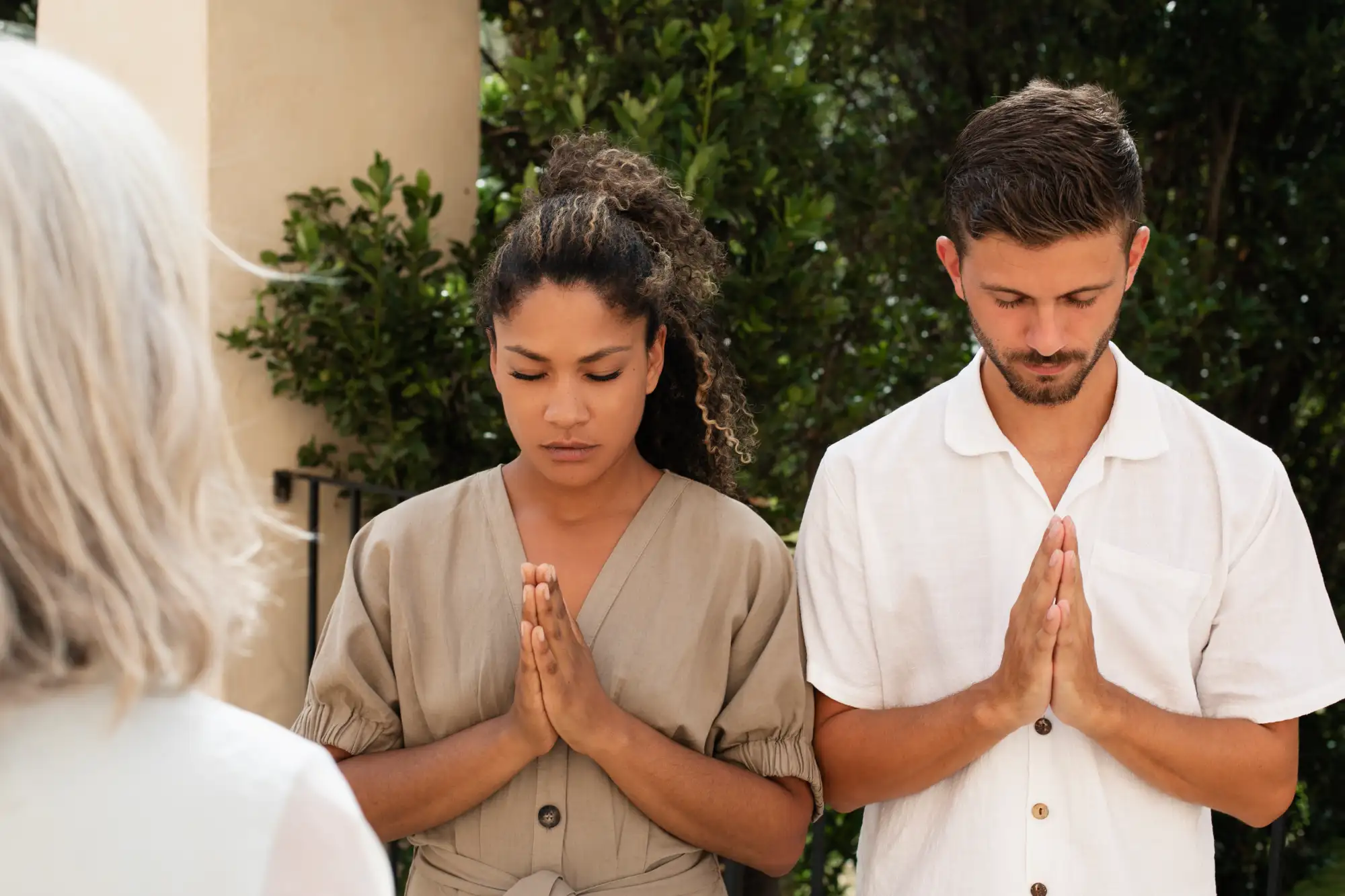
Interfaith couples navigate questions same-faith couples never face: how to honor both traditions in daily life, which holidays to celebrate, whether to attend services together or separately, and, most significantly, how to raise children religiously. Family reactions range from supportive to actively hostile, and even supportive families may harbor unspoken discomfort requiring sensitive navigation.
Family and Community Expectations
Extended family involvement expectations vary dramatically across cultures. Holiday negotiations become complex when juggling multiple cultural calendars, geographic distance from families, and limited vacation time. Language barriers with in-laws can create feelings of exclusion. Community reactions, from celebration to social exclusion, add another layer couples must navigate together.

Raising Children Across Cultures
Decisions about children’s cultural and religious identity require thoughtful planning: which languages to teach, which traditions to emphasize, how to handle religious rites and ceremonies, and how to help children develop positive identity incorporating all their heritage. For couples also navigating parenting philosophy differences, our Parenting & Family Workshops page addresses conscious co-parenting tools that complement intercultural work.

How Imago Therapy Helps Intercultural & Interfaith Couples
A Specialized Approach for Building Understanding, Connection, and Shared Meaning
Validation as the Core Principle
The Imago concept of validation is particularly powerful for intercultural and interfaith couples. Validation means acknowledging that your partner’s perspective makes sense given their background and values, even when it differs completely from yours. You don’t have to agree, but recognizing your partner’s position has internal logic creates the safety needed for productive negotiation. Learn more about this foundational concept on our Imago Relationship Approach page.
Understanding Childhood and Cultural Foundations
Imago’s emphasis on understanding how childhood shapes adult patterns extends naturally to understanding how culture shapes expectations. This allows moving from “you’re wrong” to “we were raised with different models,” opening space for creating a new model that honors both backgrounds.
Structured Dialogue for Charged Topics
The Intentional Dialogue, Imago’s signature three-step communication tool, creates safety for discussing emotionally charged cultural and religious topics without escalation. Couples learn this technique in depth through our Getting The Love You Want workshop or through private couples therapy with a certified therapist.
Creating Your Unique "Third Culture"
Rather than choosing between “your way” and “my way,” Imago helps couples consciously create a new family culture that honors both backgrounds, fits your actual values, and evolves as you grow together.
Practical Tools for Common Challenges
Specific Applications for Your Relationship
Navigating Religious Differences
involves regular structured dialogue about faith, creating both shared and individual sacred practices, and making children’s religious upbringing decisions collaboratively rather than by default or conflict.
Managing Family Expectations
requires presenting a united front to extended family, setting and maintaining clear boundaries, and negotiating language and communication practices for multilingual family gatherings.
Bridging Communication Style Differences
means recognizing that direct versus indirect communication styles and differing emotional expression norms are cultural patterns, not personality flaws or character defects.
Creating Inclusive Holiday Practices
involves mapping your combined cultural and religious calendar, deciding which traditions to maintain, and consciously building new traditions unique to your family.
Finding Culturally Competent Support in Texas
Therapists Who Understand Your Cultural, Religious, and Relationship Background
When seeking Imago therapy as an intercultural or interfaith couple, cultural competence matters significantly. Look for therapists demonstrating cultural humility, equal respect for both partners’ backgrounds, awareness of their own cultural biases, and direct experience with intercultural and interfaith couples.
Couples in Crisis
What experience do you have working with intercultural/interfaith couples specifically?
Have you worked with couples from our particular cultural or religious combination?
How do you handle situations where cultural values conflict with your own perspective?
Program Options for Intercultural & Interfaith Couples
Flexible Support Options Designed for Your Unique Relationship Journey
Getting The Love You Want Workshop – The foundational weekend workshop provides core Imago tools applicable to all relationship challenges, including intercultural and interfaith dynamics. $950 per couple, available in-person across Texas and virtually.
Private Couples Therapy – Individual sessions with a culturally competent Imago therapist allow deep, personalized exploration of your specific backgrounds and challenges. Typically $150-$250 per session. Visit our Relationship Help page to find a therapist.
Relationship Intensives – Private 2-5 day intensives provide concentrated focus for couples facing significant cultural conflict or family pressure. $3,500-$8,000 depending on duration.
Premarital Counseling for Intercultural/Interfaith Couples – Engaged couples navigating cultural or religious differences benefit especially from thorough premarital preparation addressing these topics before marriage.
Frequently Asked Questions
Yes. Research on intercultural and interfaith marriages shows that with intentional communication tools and mutual respect for differences, these relationships can be as stable and satisfying as same-culture marriages, sometimes more so, because partners develop stronger communication skills out of necessity. Success depends less on cultural similarity and more on couples' ability to validate each other's perspectives, negotiate differences consciously, and create a shared "third culture" that honors both backgrounds.
Interfaith couples typically choose one of several approaches after thorough dialogue: raising children in one parent's faith while respectfully exposing them to the other, exposing children to both traditions with honest explanations of the family's different beliefs, focusing on shared universal values rather than specific religious doctrine, or choosing a secular upbringing with optional exposure to both traditions later. The right choice depends on each partner's depth of religious commitment and willingness to compromise. Structured dialogue with a certified Imago therapist helps couples reach genuine consensus rather than one partner unilaterally deciding.
Family disapproval is common and painful, ranging from mild disappointment to complete estrangement. Couples therapy helps you present a united front, set healthy boundaries with disapproving family members, process the grief of strained family relationships, and maintain your relationship's priority without requiring family approval. Many families soften their position over time, particularly after grandchildren arrive, though this isn't guaranteed and shouldn't be the basis for your relationship decisions.
Yes. Imago Relationship Therapy is grounded in developmental psychology, attachment theory, and neuroscience rather than any specific religious framework. It's used successfully by couples of all faiths, mixed faiths, and no faith. The methodology focuses on communication structure and psychological understanding, not religious doctrine, making it appropriate for any interfaith combination.
Not necessarily. What matters most is cultural competence and humility, a therapist who respects both partners' backgrounds equally without treating either as "the problem" or more valid than the other. Some couples prefer a therapist familiar with their specific backgrounds; others prefer a neutral third party without personal connection to either culture. Imago Texas directory listings include therapists' cultural competencies and language capabilities so you can choose what feels right for you.
Certified Imago therapists in Texas typically charge $150-$250 per session for individual couples therapy. The Getting The Love You Want workshop costs $950 per couple for a complete weekend intensive. Private relationship intensives range from $3,500-$8,000 depending on duration. Many therapists offer sliding scale fees, and virtual options typically cost 20-30% less than in-person sessions.
Moving Forward Together
Your intercultural or interfaith relationship offers extraordinary richness alongside real challenges. With the right tools and support, you can navigate differences successfully, creating a partnership that honors both backgrounds while building something uniquely your own.